November 2, 2026
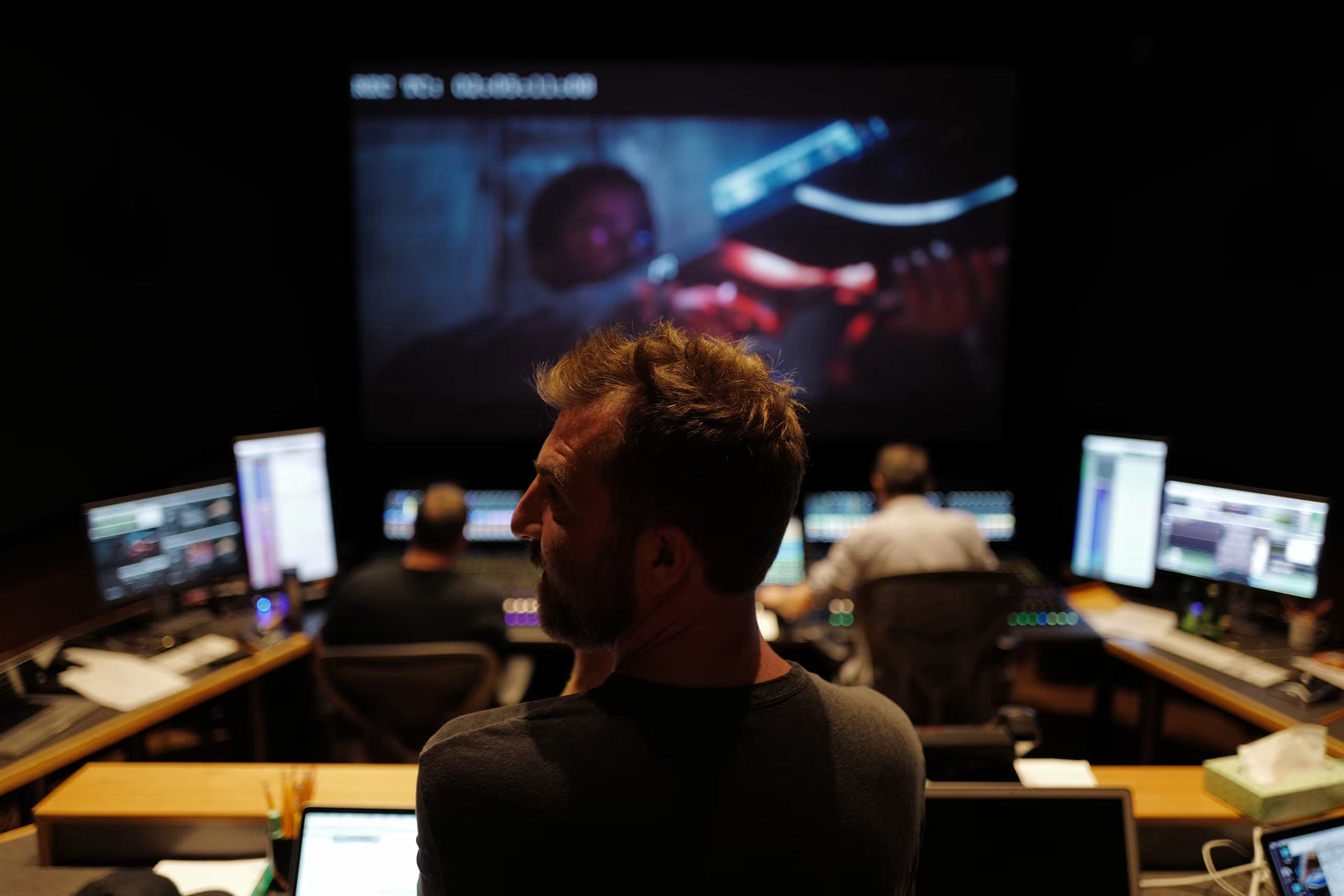
Joseph Fraioli has worked on projects like Tenet, Fallout, Kin, and has spent years in high-profile advertising.
In a chat with Axel Rohrbach from BOOM Library, he talked about the habits that help him keep his work quick, clean, and impactful. They include advice on sound design and attitude, for Joseph both count when working with clients.
1. Check The Mids First
Years ago, mastering engineer Taylor Deupree returned a record Joseph had made, and it sounded totally different. Joseph asked what he had changed. “He said, ‘Your mids were all screwed up.’ It opened my mind. On every EQ now, the first thing I look at is the mids.”
This is especially important for film, since dialogue sits in the mids. “If you have high-end detail and low-end weight, you’re cutting a hole so dialogue doesn’t have to fight.”
2. Every Sound Has To Earn Its Place
Joseph’s mixes are full and loud, but never messy. “It has to count, 110%, it’s all about the story. You come to me with an edit, and it can look flat and linear, and we punctuate it, make it more intense at the moments we need.”
Always ask what each layer adds to the story. If you don’t have a good answer, mute it.
3. Trust Your Own Ears
Axel noticed that Joseph’s work has almost no broadband noise, which is intentional. “That’s what my ears want. Other people’s ears want something else, the same way one picture editor cuts a scene differently from another. I’m not going to add noisy sounds because I just don’t want to hear them.”
Your style is shaped by what you choose not to include.
4. Leave Your Ego Out Of The Notes
A 30-second commercial might come with pages of notes from many people. Joseph suggests looking past the words to find the real problem.
“If you let your ego get in the way, you’ll end up unhappy. This job is about solving problems. If you take a step back, you can see the bigger issue. What message isn’t coming through? Then you can suggest alternatives and offer options along with what they originally wanted.”
Deliver what they requested, but also show them an option that could work even better.
5. Character First, Fidelity Later
Joseph often starts with sounds recorded on a phone. If a recording has the right character but not enough weight, he adds the weight while keeping the character.
“A door closes, and it doesn’t have enough weight, but I like the character of that door. I’ll clean it up and get the weight and impact I want without stacking multiband compression and EQ.”
He uses UBERLOUD, boosting the highs and lows and leaving the mids at zero. “You get the detail and the weight. It’s almost a rebalance of the sound’s character.”
6. Reverse It, Re-Record It, Reverse It Again
For Tenet, Joseph reversed gun recordings and played them through a PA system in a canyon near Mount Wilson. He recorded the playback using microphones placed at different distances.
“Then you re-reverse it, so you get the pre-echo. It made this organic swell.”
This technique works with any sound. The space adds a natural tail that no reverb plugin can match, and reversing it puts that tail before the sound.
7. Fresh Ears Expose Repetition
The kitchen fight scene in Tenet took two weeks to finish. “I’d think it sounded great, come back the next day and every punch sounded the same again. So I’d rethink it; I punched pillows and layered different textures until it sounded right.”
If something sounds repetitive, take a break and listen again the next day. Fixing it often means using new sounds, not just more processing.
8. When Everything Lives Low, Add Harmonics
While working on a Warhammer 40,000 episode, the team pushed the mix into the low mids and lows, and some sounds started to disappear.
“I used UBERLOUD on everything. But then a sound would disappear because there was too much low frequency. So I’d start turning up UBERLOUD’s clipper so things would pop out. You’d get a little harmonic distortion from that, which was super helpful.”
Adding harmonics gives low-heavy sounds something for the ear to catch, without raising the volume.
9. Protect The Transient
Joseph used to add weight by copying a track, boosting the lows, and low-pass filtering the copy as a separate layer. Now he uses UBERBASS, which is much faster.
“With UBERBASS, the transient information is completely retained. When you try to get there with multiband compression or EQ, you end up going back and reshaping the transients. That’s why it’s so much faster. Speed is everything when you’re being creative. You want the result as soon as possible so you stay inspired.”
He knows which low-end tool to use for each job. Enforcer adds a triggered sound underneath, while UBERBASS creates bass from the original input, so it matches the source. A short, percussive sound gives short, percussive bass. For a long growl that needs steady coverage, UBERBASS is perfect. “They’re different tools in the same category.”
A huge thanks to Joseph for making the time to share his skill and experience with us and the wider BOOM sound design community.
Software / Plug‑In
Uberbass
Bass Enhancer Plugin
Bass enhancer plug-in for music, sound design and sound for picture. Harmonically BOOST low end, focus it where the source needs it, drive it, gate it. Hear UBERBASS.