September 1, 2026

Building a fantasy interface often means pulling sound effects from four different libraries at once. A wooden creak from one, a magic shimmer from another, then a confirmation tone from a third. Then the real sound design work starts: making three unrelated sources sound like they belong to the same game.
MAGIC UI solves this.
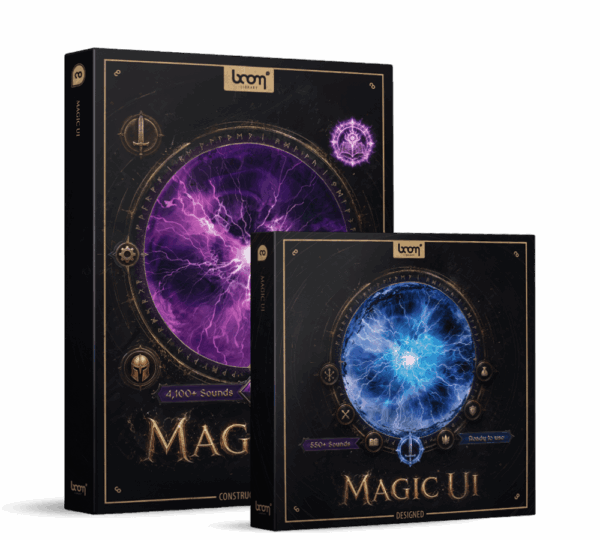
“MAGIC UI is a sound library for UI that is inspired by fantasy games and has been created for use in fantasy RPGs, strategy games, and adventure games, encompassing all kinds of player interactions, from menus and inventories to quest rewards and character progression,” says Benjamin Drumeaux, the product lead for MAGIC UI at BOOM Library. The concept originated from a gap he continually encountered. “We’re creating libraries mainly because we needed them for our own work and couldn’t find a decent dedicated Fantasy UI library. Having a reliable go-to library helps immensely when starting large projects.“
That’s the entire basis of it: a single source, a single coherent interface; you hover, you select, you confirm, you receive the reward, and all of these actions are recorded and processed so that cohesive from the beginning, rather than being put together afterwards.
Made With Real Materials
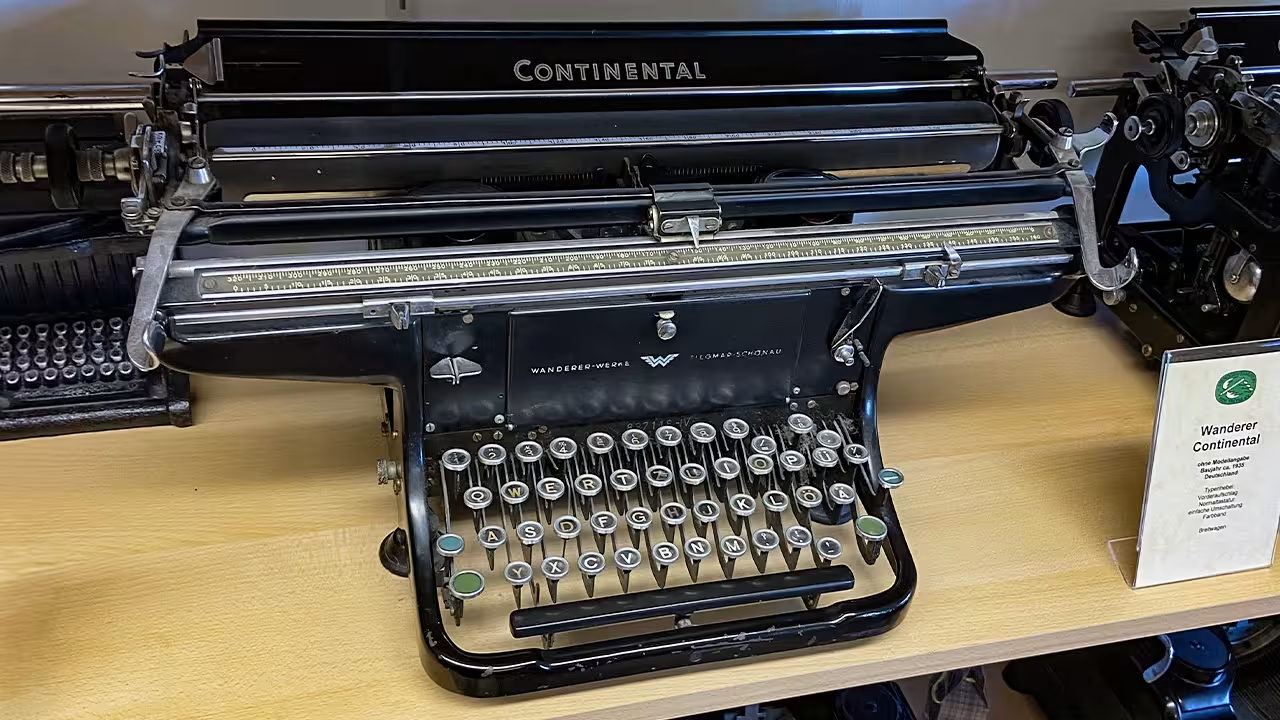
The library’s distinctive tone arises from a strange combination. All the interactions begin with organic recordings taken from wood, stone, metal, glass, and leather, recorded in places ranging from historic castles to a museum of typewriters. On top of this, there are tonal layers built from bells, singing bowls, and tuned chimes, providing clear, functional feedback rather than simply serving as a continuous overlay.
Benjamin made it clear what the library had to avoid. “The style should be mature and have a solid tone; there should be no playful sounds and no casual UI sounds. This collection is much more in line with the sort of serious RPG aimed at players who are going to play for days or even months’ worth of gameplay.“
Both cartoonish UI effects and sterile synthetic clicks were eliminated from the outset. What remains sits between those two extremes: it is serious, has a textured quality, and can clearly be seen as made from real objects rather than using plugins.



Built For Scale
A fantasy interface must handle a vast dynamic range, covering the transition from a barely noticeable hover to the point at which a quest is completed.
MAGIC UI is specifically designed with this in mind. “Our sounds will go from very small ones, highly subtle, almost transparent feedback with only a minimal presence, to large, significant moments such as a quest completion that has depth, sustain, and a touch of a cinematic quality,” explains Drumeaux. The collection isn’t a cinematic sound library, but it does need to achieve that extent when the situation demands it.




Menus And Mechanics, In One Place
The content is divided into two parts that reflect the way designers actually operate: on one side come menu navigation, selection, confirmation, and system feedback, the mechanical aspects which keep the interface together; on the other side, there are loot, rewards, progression, levelling, quests, and the economy, the moments intended to elicit a reaction from the player. Both halves are based on the same organic-plus-tonal foundation, so a designer going from a menu click to a legendary drop doesn’t need to switch sources.
MAGIC UI also fills a gap in the BOOM Library catalogue by sitting between MODERN UI and CASUAL UI, while at the same time linking into the Magic Series, so it fits directly into many designers’ existing toolkits.
The aim at BOOM is always to fill the gaps in a meaningful way rather than fill hard drives with lots of similar content.
Built For The Workflow
While many libraries can promise “magic sounds”, fewer can guarantee that each and every one of those sounds has been drawn from actual material, processed with purpose, and arranged so that the entire interface of a project can be constructed from a single source.
That is the difference MAGIC UI is designed to make.
In short, this is where UI meets magic. Check it out.
The Demos
Signature Series
Sound Effects Library
Magic UI
Fantasy UI Sound Effects
Magic UI combines wood, stone, metal, glass, and leather with magical tonal layers for menus, selections, confirmations, loot, rewards, and quests. Fantasy and RPG games are the main audience.
Total Sounds
4,650
WAV Files
846
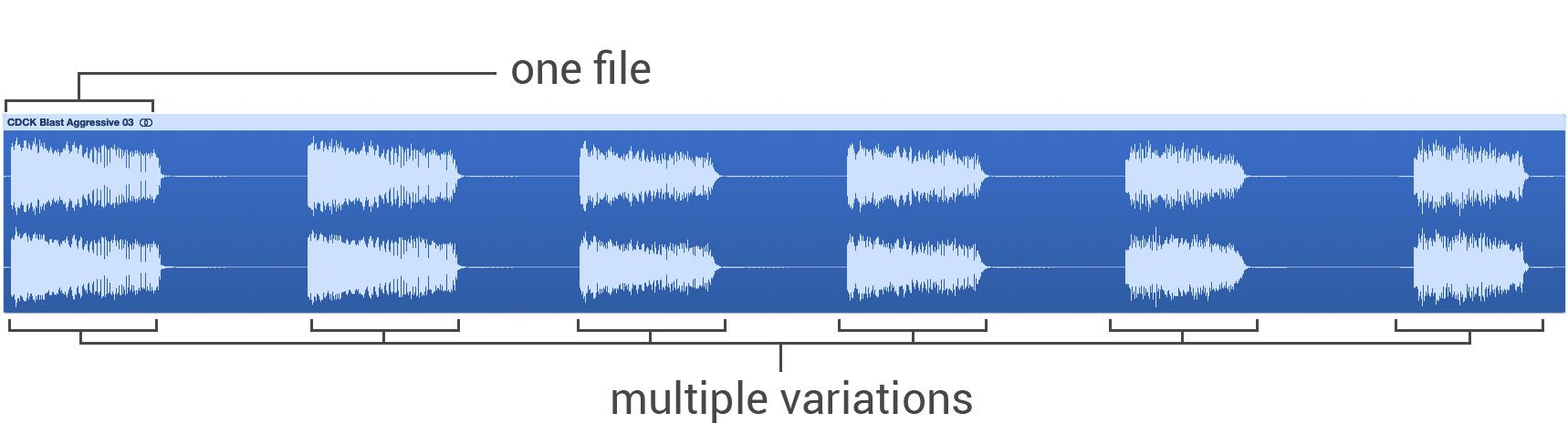
Variations
up to 6×
Sample Rate
24bit / 96kHz
Size
9.9 GB
UCS Compliant