November 4, 2026
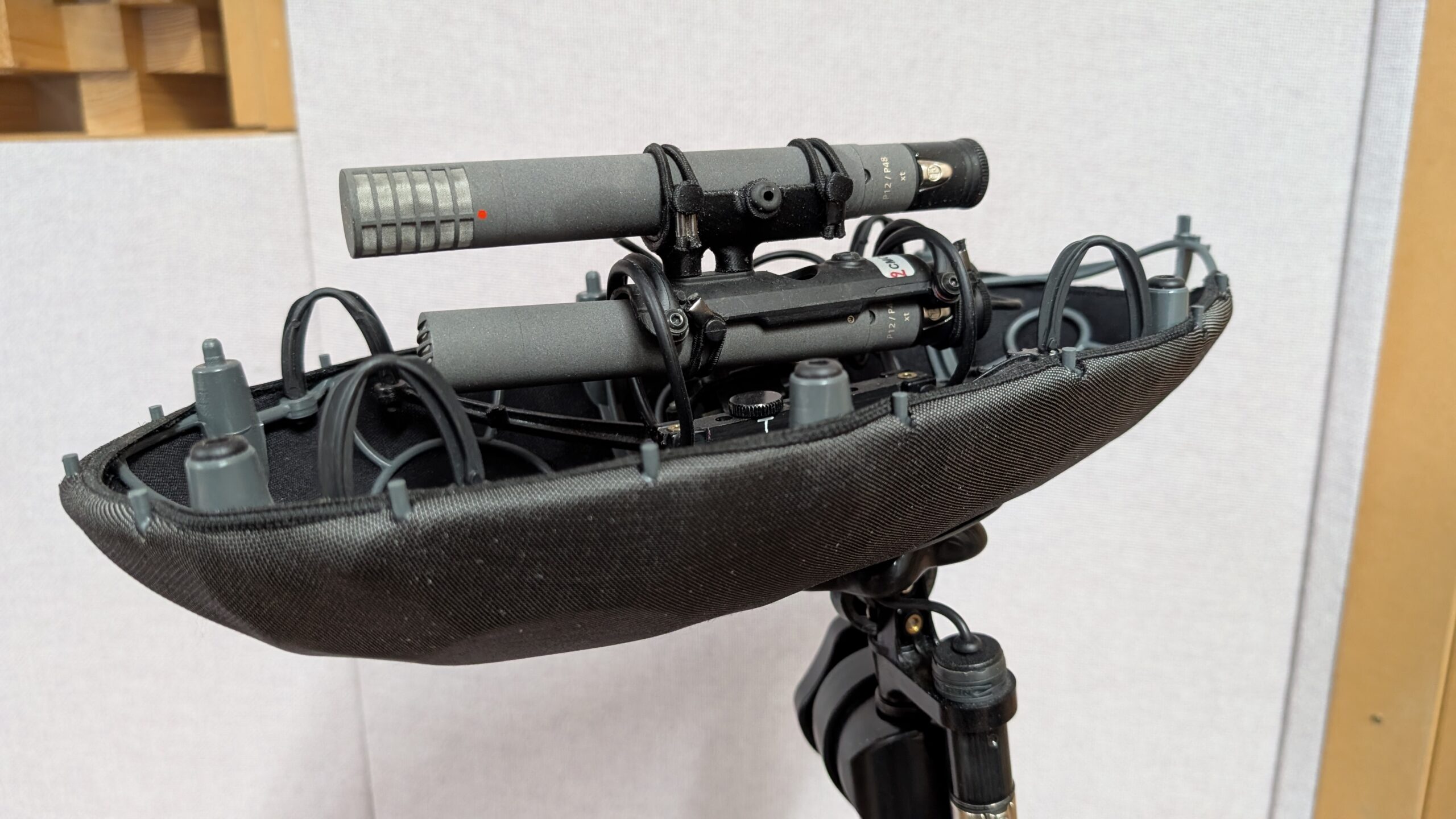
Expanding our sonic palette beyond our extensive Sennheiser 8000 series collection, we recently integrated a highly specialized SCHOEPS Mid/Side (M/S) microphone configuration into our daily sound design workflow. While the Sennheiser microphones remain a staple, adding this SCHOEPS rig introduces a distinctly new, ultra-low-noise character to our source recordings.
The Core Components and Ultrasonic Reach
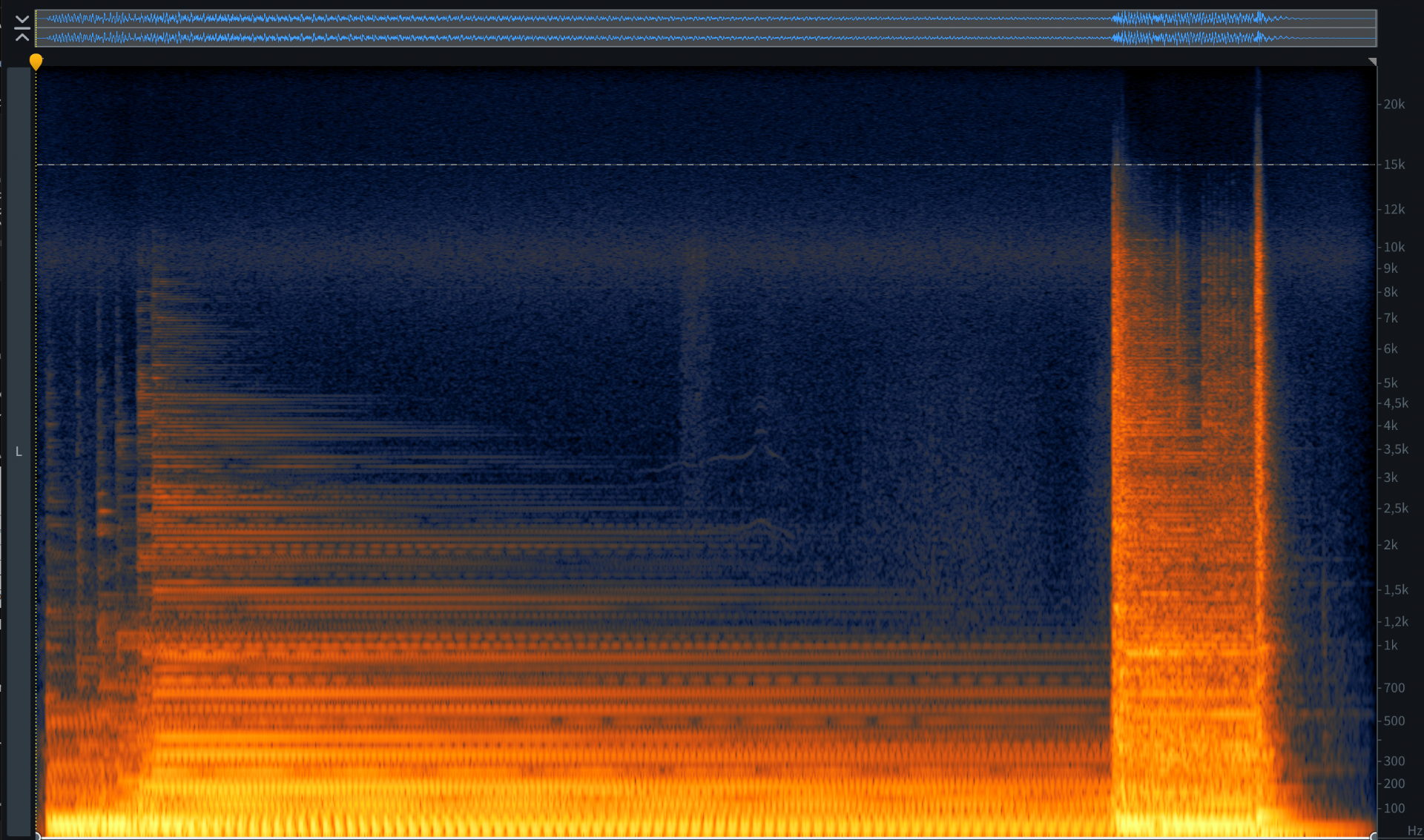
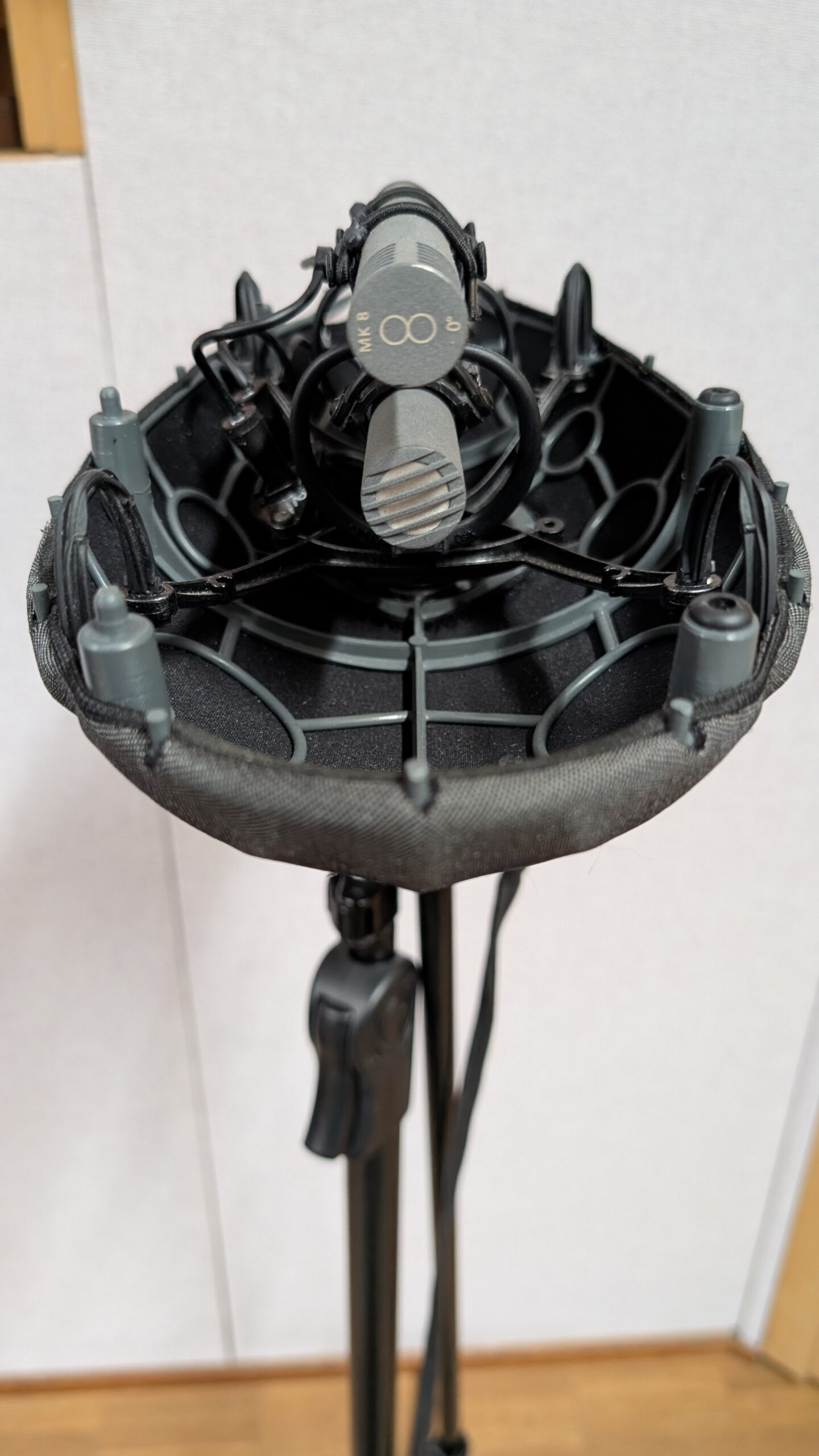
The foundation of this chain relies on the SCHOEPS CMC 6xt preamps - a special edition extending the frequency response up to 60 kHz. We pair these with a SCHOEPS MK 2 omnidirectional capsule for the Mid signal and an MK 8 figure-8 capsule for the Sides. Officially, SCHOEPS rates the MK 2 capsule with a frequency response of 20 to 40 kHz. In practice, our tests reveal it captures frequencies well beyond that threshold. When recording a guitar at 192 kHz and pitching the audio down by two full octaves, the resulting spectrum analyzer still displays frequencies up to 14 kHz. Calculating back to the original file, this confirms a functional recording range reaching approximately 56 kHz - perfect for extreme pitch-shifting in sound design without losing high-frequency detail.
Download Sound Examples Here
Why Mid/Side with an Omnidirectional Capsule?
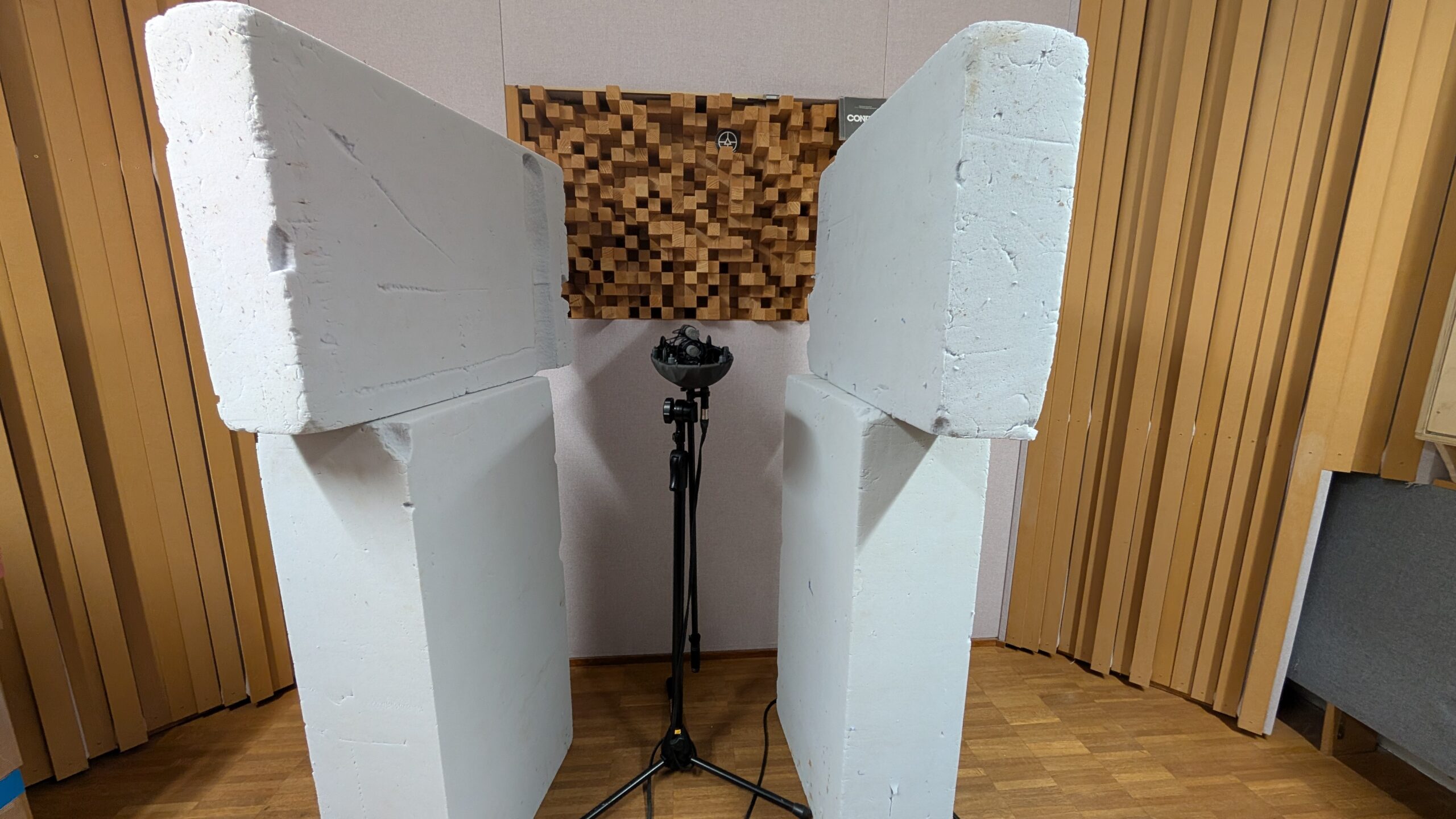
An M/S setup provides unmatched flexibility for manipulating stereo width in post-production while guaranteeing a perfectly defined, phase-coherent center image. Choosing the MK 2 omni capsule over the more traditional MK 4 cardioid capsule was a deliberate choice to capture a larger sound with superior low-end response. The natural trade-off of an omni microphone is increased room reflections from the sides. To counter this in the studio, we surround the microphone with custom Basotect acoustic panels to create a miniature recording booth within an already quite damped room. For future field recording sessions, adding an MK 4 cardioid capsule to the kit remains an option to adapt to more unpredictable acoustic environments.
The Mechanics and Origins of the Mid/Side (M/S) Matrix
Developed by Alan Blumlein in 1933 during his pioneering stereo research at EMI, the Mid/Side (M/S) technique was originally designed to solve phase coherence issues in early cinema sound. Today, it remains a staple in professional sound design and field recording.
The configuration relies on a Mid microphone capturing the direct sound and a Side microphone (strictly a figure-8 polar pattern) positioned at a 90-degree angle to capture the lateral field. While the SCHOEPS setup reviewed here employs an omnidirectional Mid (MK 2) specifically to exploit its uncolored low-frequency extension and larger sonic footprint, professional field recordists typically default to highly directional Mid microphones—such as a hypercardioid or shotgun (interference tube).
Pairing a shotgun mic with a figure-8 is the industry standard for production sound. The shotgun’s extreme off-axis rejection focuses tightly on the primary subject, while its deep side nulls perfectly complement the side-facing lobes of the figure-8. This yields exceptional center reach alongside a scalable stereo image.
In the DAW, M/S decoding mathematically matrices the signals (Sum: L = M + S; Difference: R = M - S). Because summing the decoded stereo track to mono mathematically cancels out the Side signal completely [ (M+S)+(M−S)=2M ], M/S guarantees 100% phase-accurate mono compatibility. This absolute phase safety is why M/S remains indispensable for broadcast, film, and game audio pipelines.
Field vs. Studio Workflows
For outdoor recording, the setup is housed inside a Cinela windshield, which completely eliminates handling noise, shock impacts, and wind interference - a task made even easier by the omni capsule’s natural resistance to wind noise. Our mobile rig is powered by a Sound Devices MixPre-6 II. The 32-bit float recording capability is a massive advantage in the field, entirely removing input gain worries while maintaining an incredibly low noise floor.
Back in the studio, we route the microphones through Louder Than Lift Off’s Silver Bullet V1 preamps. By driving the input stage hot, we can introduce musical saturation right at the source, adding density and weight to the final sound effects before they even hit the digital domain.

Michael Schwendler
Sound Director BOOM Library
Cinematic Hits / Cinematic Metal / magic & more

WIN PRO SCHOEPS GEAR WITH BOOM LIBRARY
We’ve teamed up with our friends at SCHOEPS Microphones, who have been kind enough to provide some amazing prizes for our community. Used by many of the industry pros as part of their recording tool kit, this is an incredible set to add to your collection.
Get on board today!
All BOOM Library newsletter subscribers who enter the prize draw by until December 3rd at 11:59 PM CET have the chance to win a SCHOEPS Desert Island Boom Set, a SCHOEPS CMC 6xt + MK 4 bundle, or one of five exclusive BOOM Library branded bags - a total value of over $6,500.00.
No purchase required.
Enter now