July 30, 2026
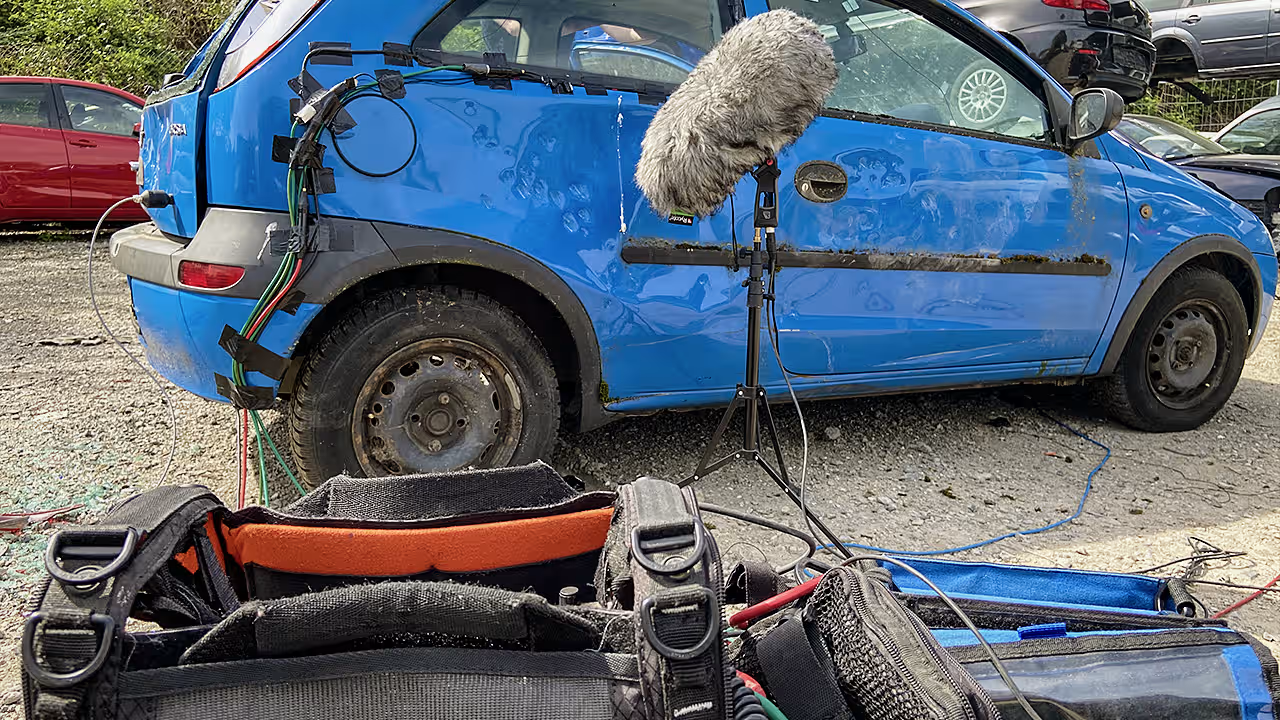
ROAD RAGE began as a custom project, not as a BOOM Library. A top game studio requested isolated recordings of every component of a vehicle collision, tailored to their specifications. As part of our work, we offer bespoke design, and we approach such commissions with the same attention to detail as our own catalogue.
And when the resulting material meets our standards and the client agrees, it becomes a library in its own right. ROAD RAGE is one such example. Product Manager Patrice led the project, and here is how it was developed.
Built To An Exacting Brief
A custom commission sets a different bar. The client knew exactly what their game demanded, and that demand was enormous in its range.
“They needed a huge variety of sounds for their game,” Patrice explains. “And it was not only a car crash or impacts, but also hitting with the bumper on the left side, on the right side, with carbon, with metal, hitting a pole, hitting a plastic sign and all of those elements.“
In racing games, players can collide with nearly any object, like fences, road signs, poles, walls, and other vehicles. Each surface requires a unique sound that responds to player actions, not just a generic effect.
To achieve this level of detail, we recorded every component separately, ensuring flexibility and modularity. This approach forms the foundation of the kit and allows it to function effectively as a library.
More Than One Way To Break A Car
ROAD RAGE combines detailed, destructive sounds captured in two distinct recording environments.
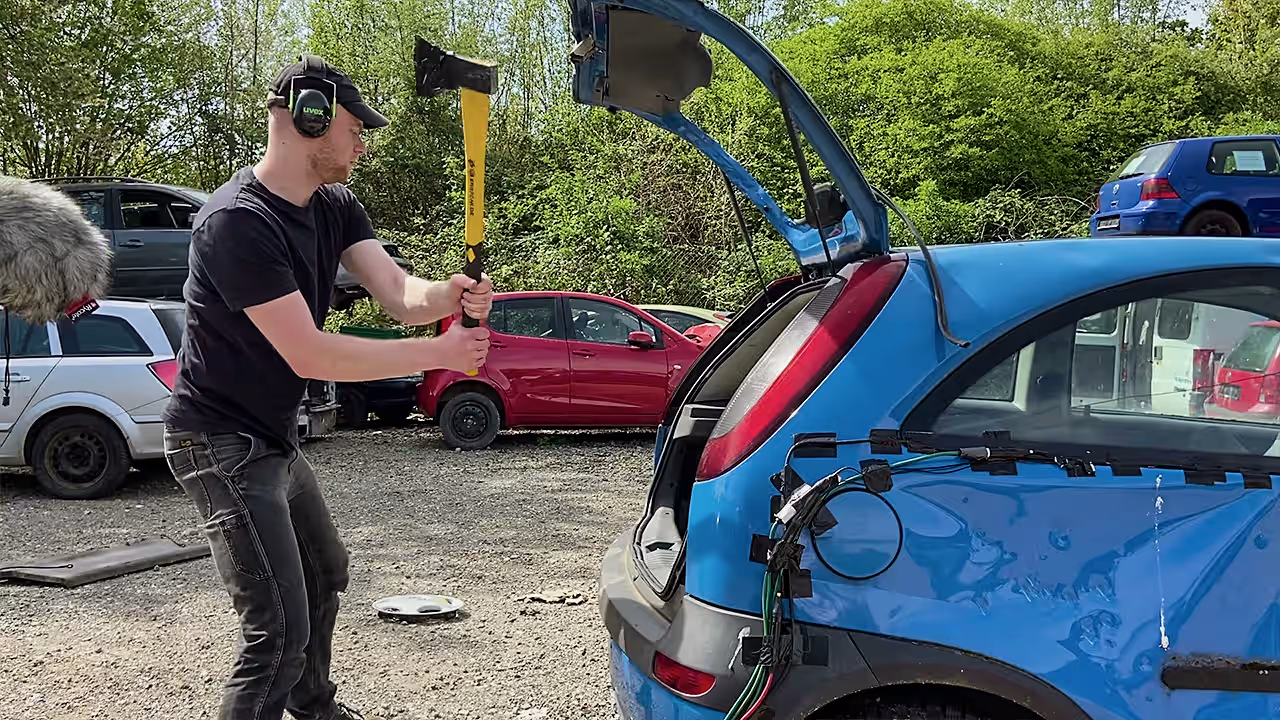
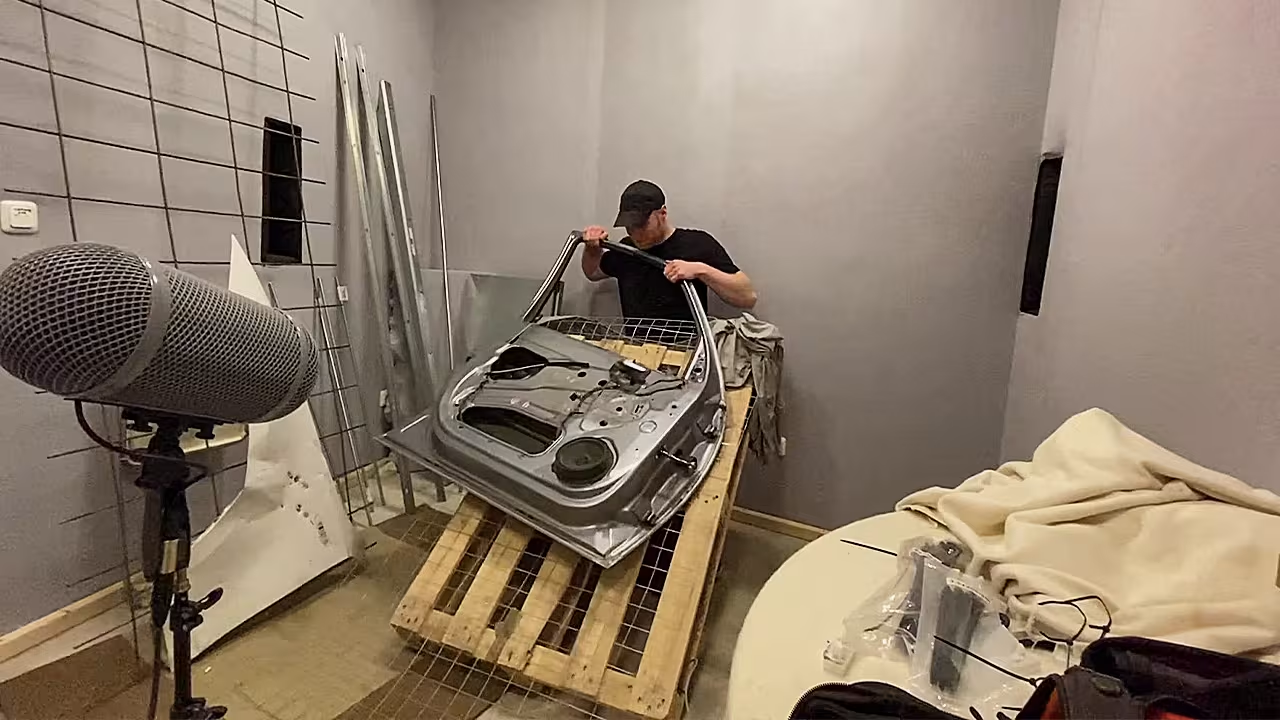
In the studio, we isolated components and recorded them from every angle, like striking, bending, scraping, and twisting them with close microphones and with minimal room acoustics colouring the sound. This process captured the forensic detail: headlight cracks, mirror snaps, and subtle mechanical failures that precede major impacts.
“In the studio, we had a dishwasher, which we hit from all sides in every possible way,” Patrice says. “We also had smaller props.“
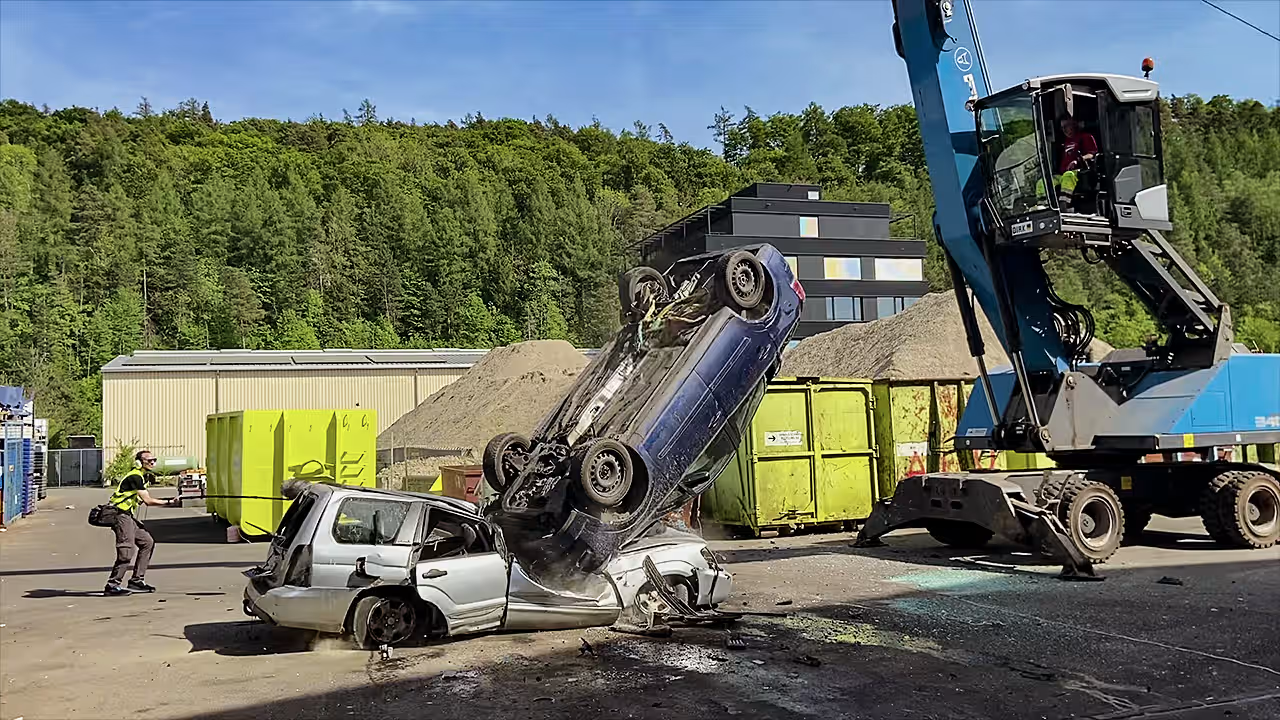
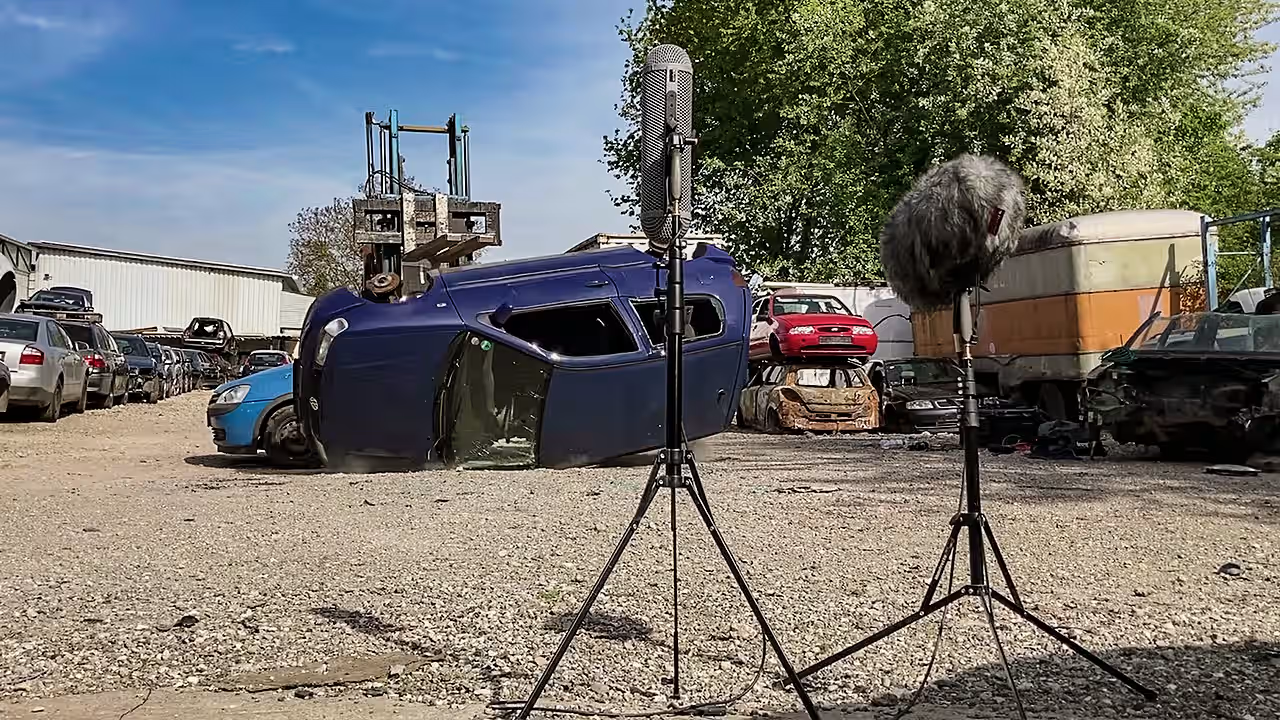
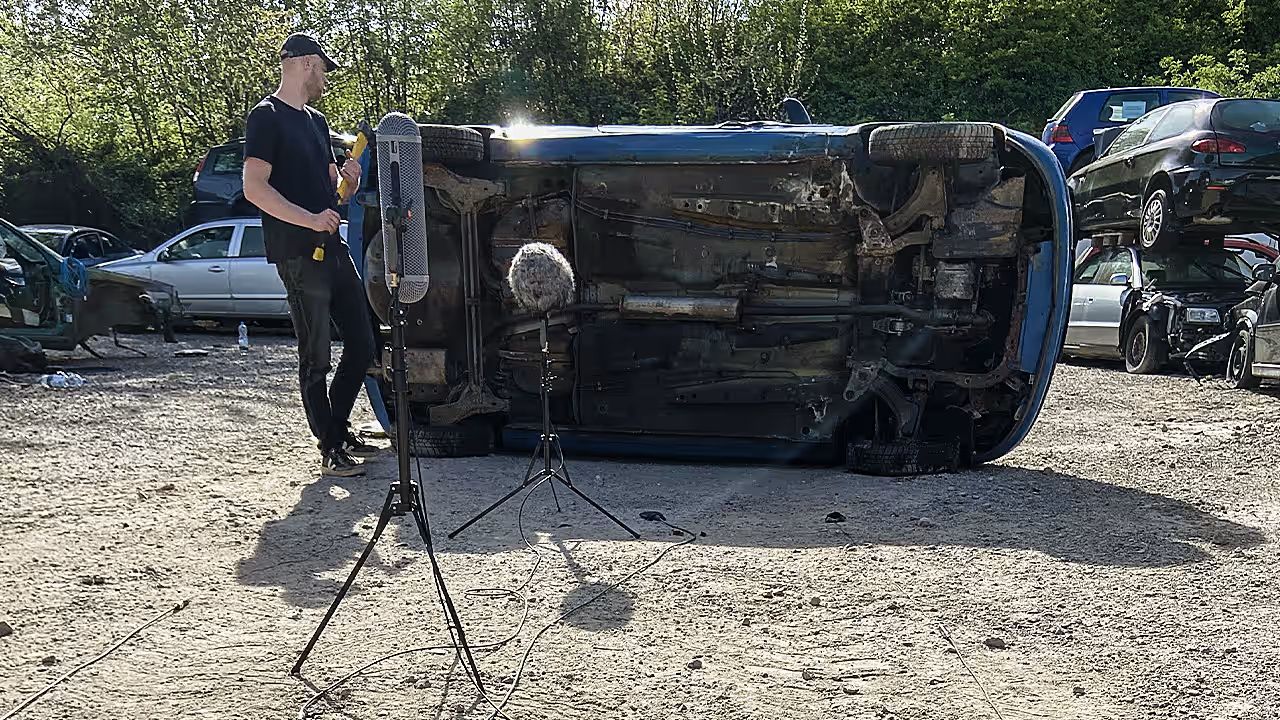
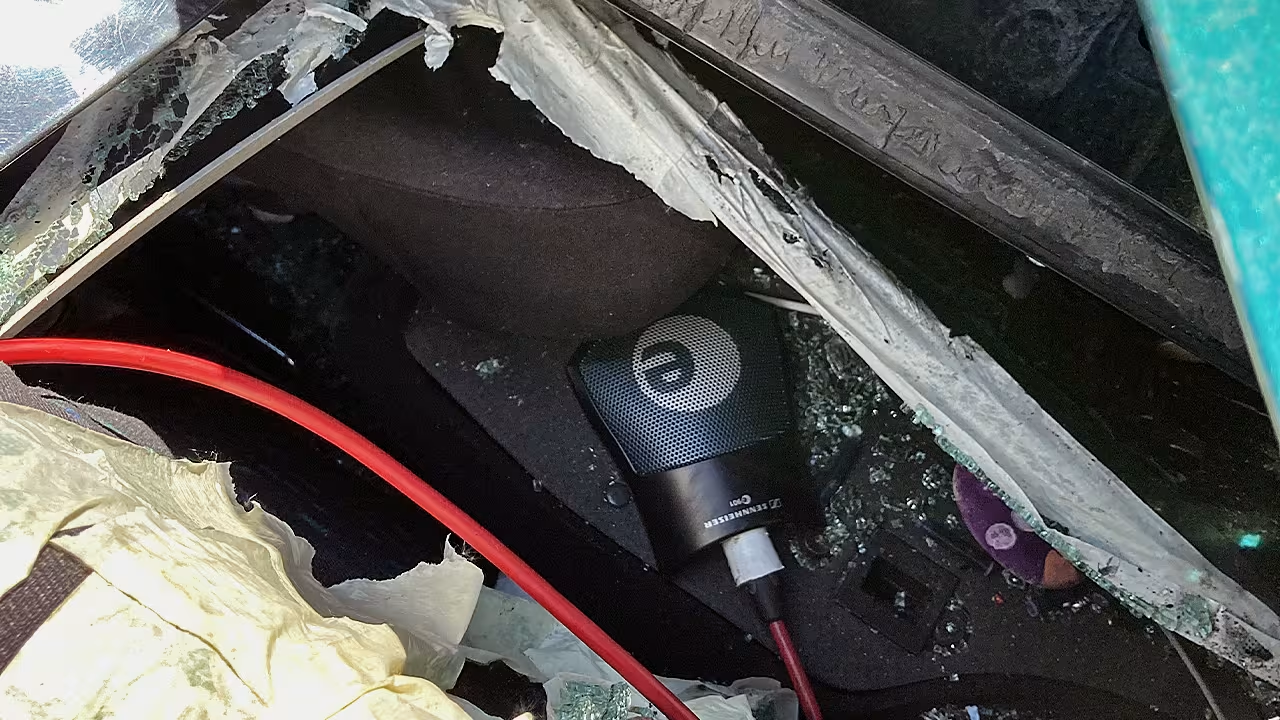
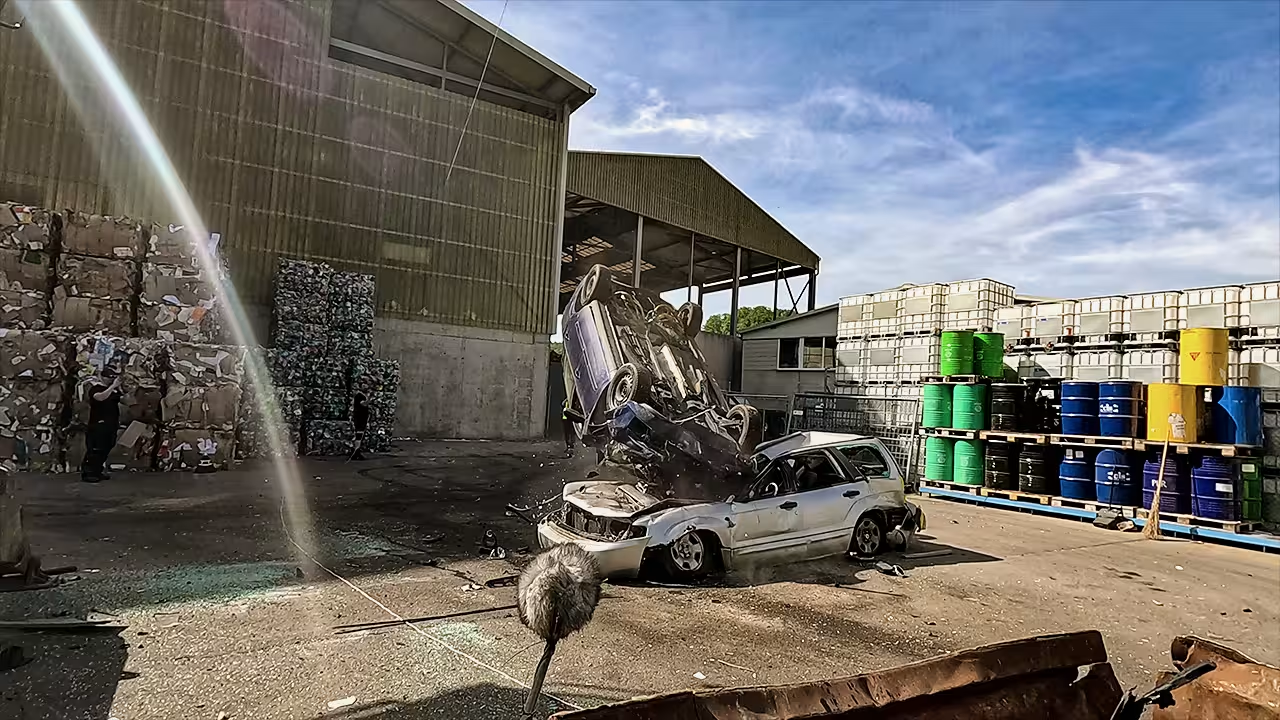
The scrapyard provided authentic mass and force, capturing heavy objects in real collisions. A forklift lifted a car two and a half to three metres and dropped it, with microphones placed inside and around the vehicle. These recordings deliver the impactful sounds at the top of the dynamic range.
Neither environment is sufficient alone. The studio provides precision, while the scrapyard delivers energy that cannot be replicated. Together, they capture every aspect of a crash, from subtle details to the most intense impacts. We didn’t think we could have one without the other.
We’re Going To Need A Bigger Crane!
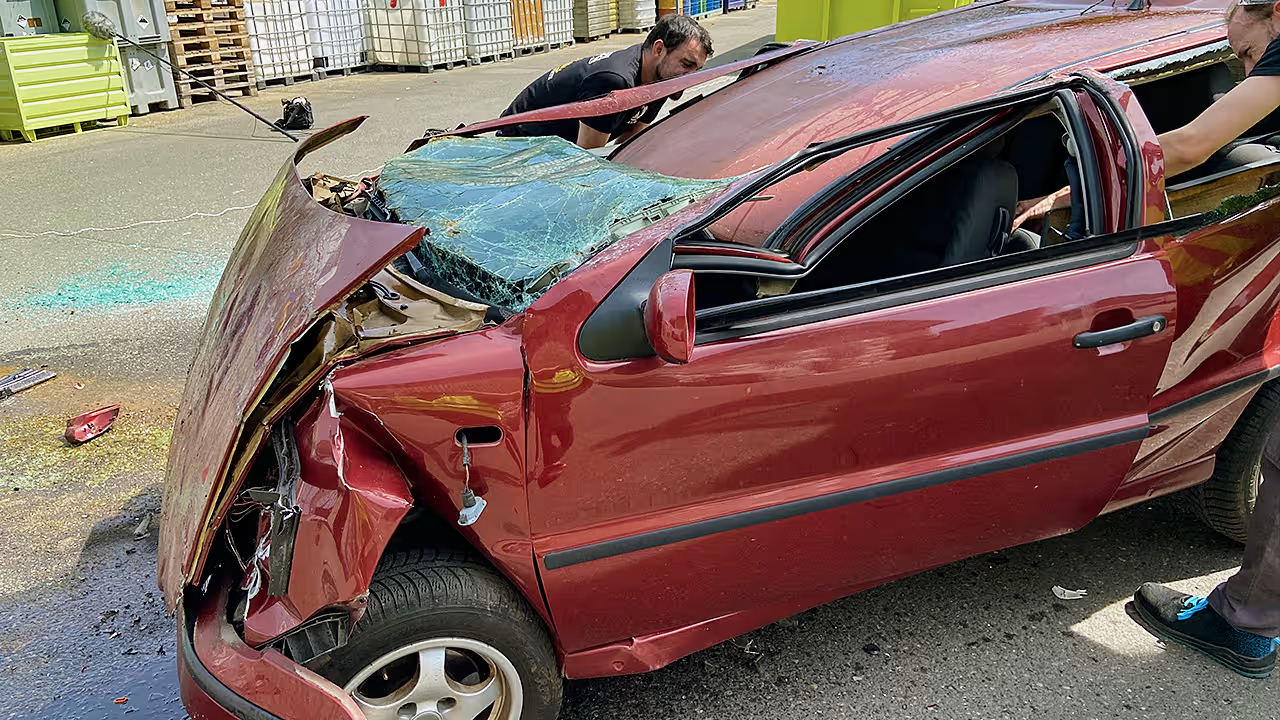
No shark in this library, but we did need a bigger crane! To capture the most dramatic moments, the team dropped one car onto another, using real vehicles and placing microphones inside to record the authentic impact.
“We put a recorder with some microphones inside the cars for the crane drops,” Patrice says. “Protected in foam, ranged through the body, so we caught the impact from inside the structure as well as outside.“
Stunt drivers and staged collisions were dismissed in favour of this controlled approach. Real vehicles, gravity, and impacts produced more genuine results than choreographed crashes.
ROAD RAGE includes everything from a mirror cracking in the studio to a vehicle dropped from height, with every sound sourced from actual impacts.
Lots Of Small Moments Make One Big Event
ROAD RAGE is designed for granular sound design, reflecting the complexity of real crashes, where each moving part and surface has its own distinct sound.
Film and television use a similar approach, though for different reasons. While a crash is central to a scene, it is the surrounding details like the crunch, scrape, breaking glass, or bouncing pole that authenticate the impact. The crash is never a single effect; the details define the moment. The construction kit in ROAD RAGE enables this, and when deadlines are tight, expertly designed sequences can be used immediately.
It gives a sound designer full control, with no loss of detail.
Pre-made crash sounds come with fixed choices for vehicle, speed, angle, and surface, which can be sufficient in some cases.
ROAD RAGE provides individual components, allowing you to tailor each scene. Glass, panel scrapes, and bumper strikes can be matched to on-screen action, ensuring every crash sounds unique.
This is the difference between a library that supplies sounds and one that enables design. ROAD RAGE is designed for creative flexibility and for those who know that detail matters.
The Demos
Signature Series
Sound Effects Library
Road Rage
Car Crash Sound Effects
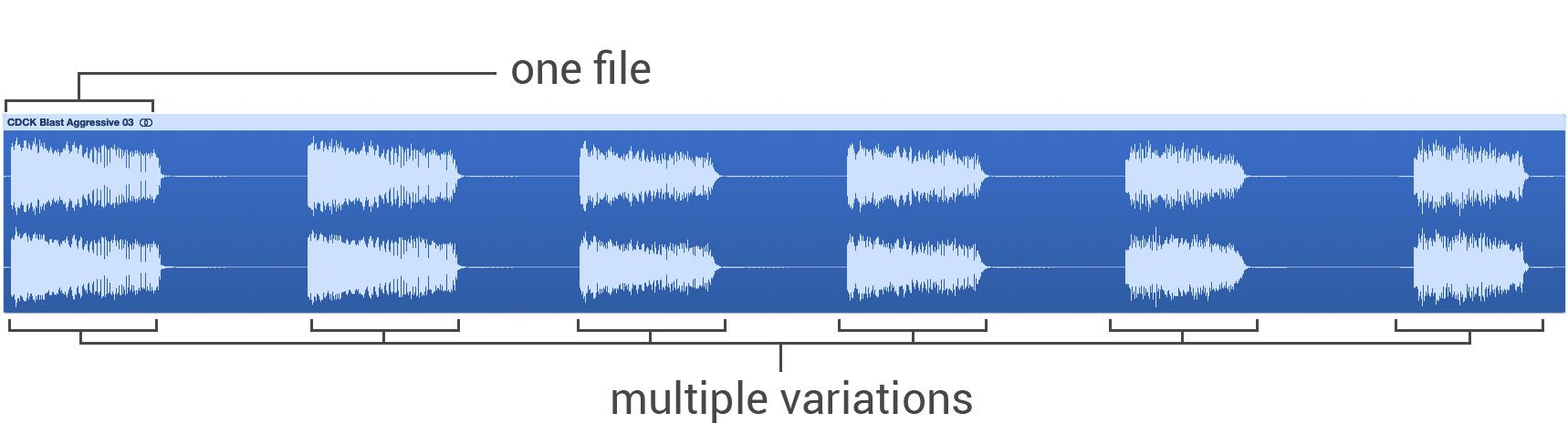
Road Rage contains everything a car crash needs: glass, metal, plastic, and structural elements, tire screeches, and impacts on road signs, fences, and poles. Stereo, Ambisonics, and contact microphones captured each element, which also suits physics-driven crash systems in racing games.
Total Sounds
5,960
WAV Files
690
Variations
up to 10×
Sample Rate
24bit / 96kHz
Size
14.2 GB
UCS Compliant