From Punk Rock to Spider-Verse: Inside the Sonic World of Daniel McNamara
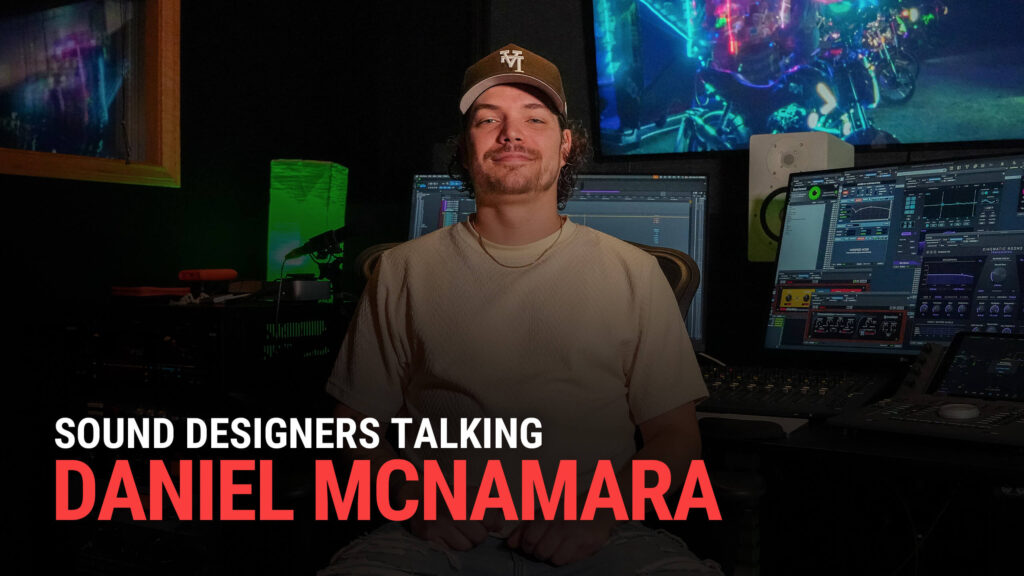
If you’ve watched Spider-Man: Across the Spider-Verse, The Good Doctor or Sausage Party: Foodtopia, you’ve already heard Daniel McNamara’s work. A sound designer and effects editor based in Burbank, Daniel’s career is a story of persistence, curiosity and creativity. He’s one of those rare professionals who genuinely loves both the craft and the chaos of sound design.
We spoke with Daniel about his path into post, his creative process and the philosophy that’s guided him from his early music-making days to major animation features. What follows is a conversation with someone who is passionate, has boundless enthusiasm and energy, and who never stops throwing ideas at the wall, sometimes literally, to see what sticks.
Early Days and Finding Sound
BOOM Library: You didn’t come from a film or sound family. How did this all start?
Daniel McNamara: No, no one in my family worked in sound or music. Most of them are from Philadelphia, carpet layers and union workers. My grandmother was a computer programmer though, and she pushed tech on us early. We were lucky to have Windows 95 back in the day, and she saw the future of computers before anyone else did.
My mom got me into music. She’d always play alternative rock and punk on her radio, so inevitably I wanted to be a rock star. I picked up the guitar and drums, and was in a few bands growing up. One got signed and then fell apart, as these things often do, but that gave me my first real taste of studio life, large format consoles, tape machines, all of it. That’s when I decided if I couldn’t be a rock star, I wanted to be on the other side of the glass.
BOOM Library: And that led to film sound?
Daniel McNamara: Kind of by accident. I went to the Los Angeles Recording School. I was making music, and one of my teachers, Jake Allston, who used to work at Max Post, said, “You’ve got a knack for creating sounds in your songs, ever thought about sound design?” I had no idea you could even get paid for it. He taught me the basics, then I just kept pestering him after hours until it clicked.
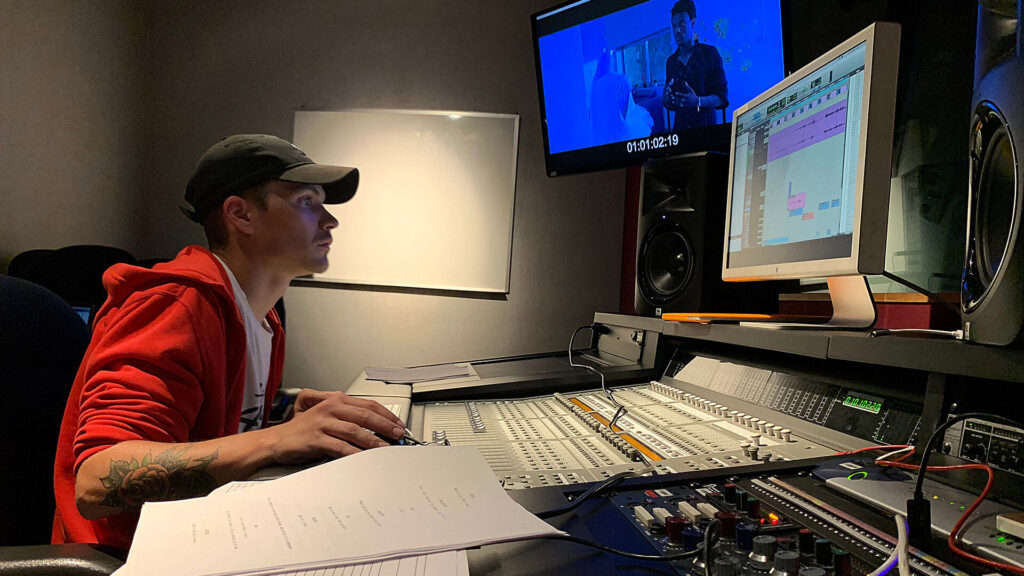
After school finished I joined the Academy Gold programme, now called Gold Rising, and that really opened doors. My mentor there was Tommy McCarthy. He gave me an office on the Sony lot and basically said, “Show me what you can do.”
Breaking In
BOOM Library: What was your first proper break?
Daniel McNamara: The Good Doctor. Tommy introduced me to supervising sound editor Richard Yawn, who’d been doing the show for years. He handed me the reins and said, “You can’t mess this up.” It was a well-oiled machine, so I had to learn to fit in without breaking it.
At first, I over-engineered everything, gore for the operations, spotted hallway bys, background details that nobody needed. I learned fast that sometimes restraint is just as important as creativity.
BOOM Library: You’ve done a lot of animation work too. What drew you to that?
Daniel McNamara: I’ve always loved animation. When I was on The Good Doctor, I kept saying to Tommy, “I want to do cartoons.” Eventually, he introduced me to supervisors who worked in that world. One was Geoff Rubay, who later brought me onto The Magician’s Elephant and then Spider-Man: Across the Spider-Verse. That was the real turning point.
Creativity, Curiosity and Chaos
BOOM Library: You’ve got a reputation for experimenting. What’s the most unusual sound you’ve ever used for something completely different?
Daniel McNamara: I’ve got a whole archive of my grandfather’s old camcorder tapes, family holidays, birthdays, everything. I digitised them all and sometimes use them in my work. I’ll take a clip, pitch it down, process it until it’s unrecognisable and sneak it into a film. My family loves it. They’ll say, “I’m in a Hollywood movie!” even though they’d never recognise themselves.
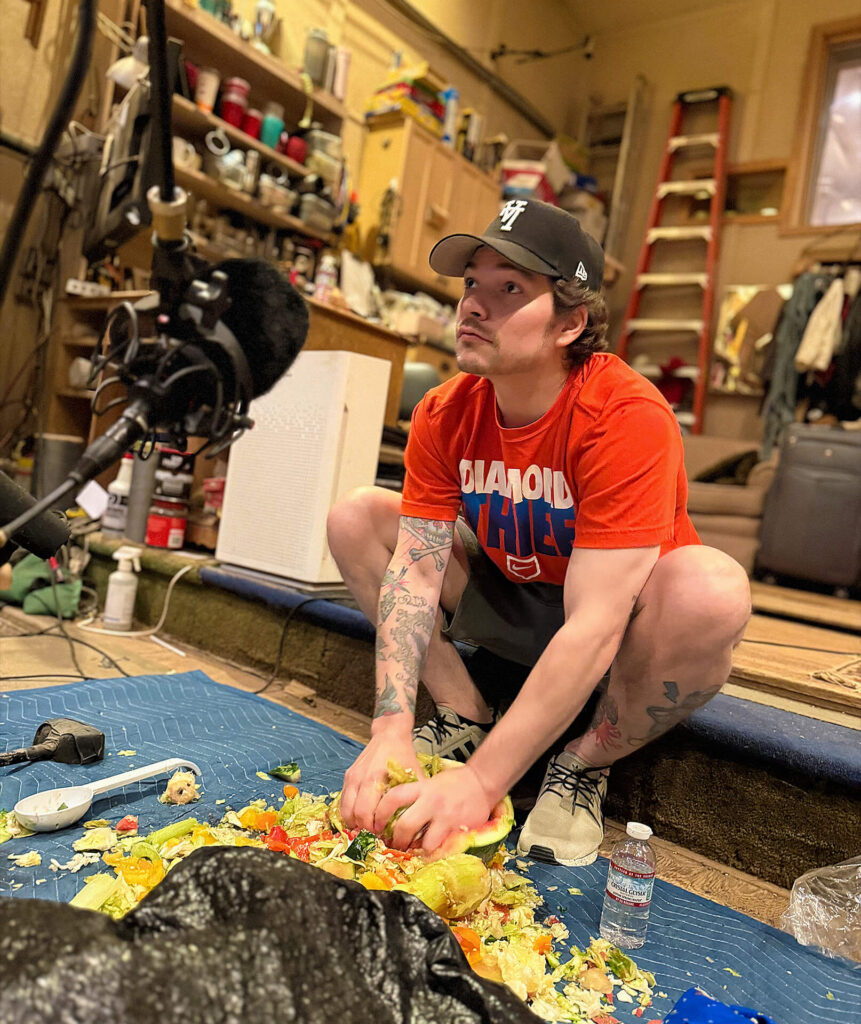
And then there’s the more physical stuff. For Spider-Verse, I used duct tape and metal rods to get those whips and flicks in Spidey’s (Pavitr) movements. I’m always trying to make something new out of something ordinary.
Tools of the Trade
BOOM Library: What’s your go-to mic for Foley or studio work?
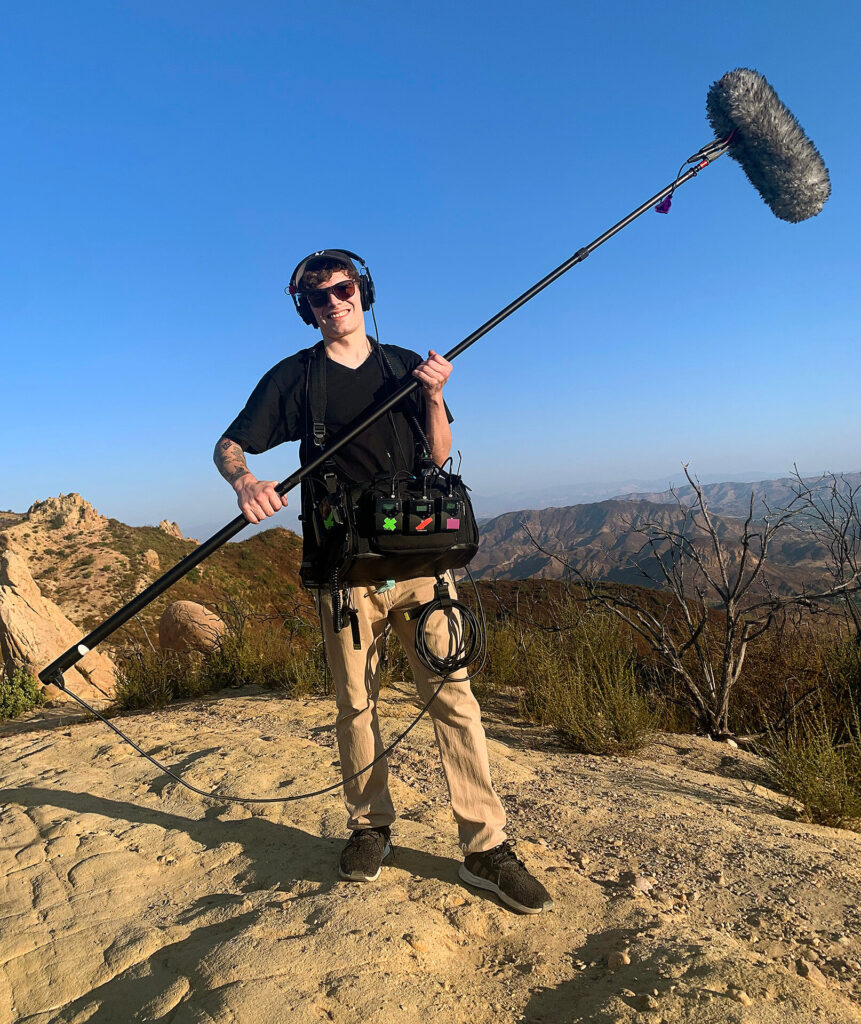
Daniel McNamara: I’m a big fan of the Lewitt 540s. I learned about it through my friend Bastien Benkhelil at Anomaly Sound Studios in North Hollywood. It’s got a super-low noise floor, which makes it perfect for Foley and animation. We also use omni DPAs magnetically attached to props for a contact-mic feel.
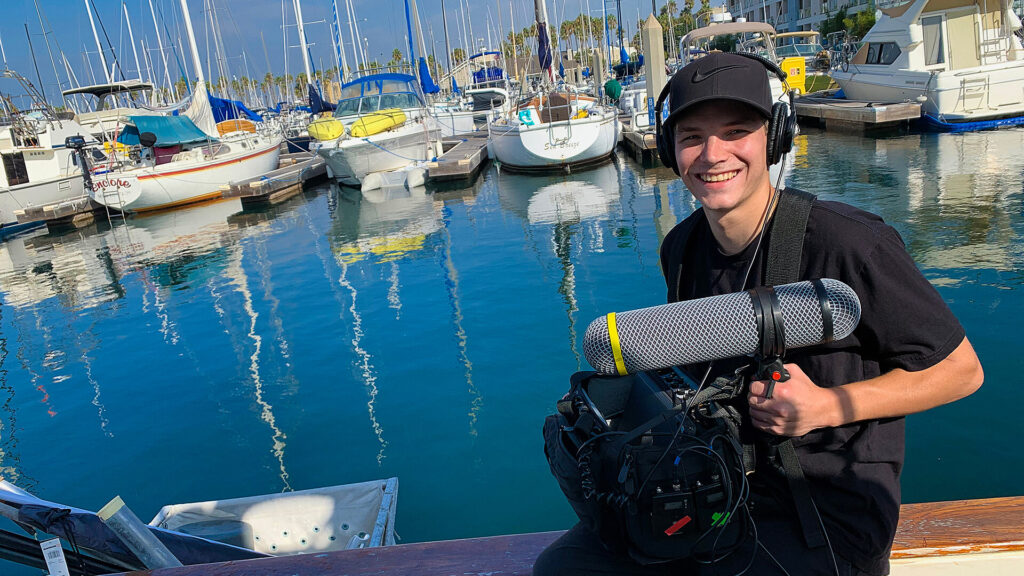
For field work, I use a Sound Devices MixPre-10 and a Zoom F3. I pair them with a couple of 416s/MKH50s, a pair of Basic Uchos, and Geophones from a company called Lom. They were originally meant for recording seismic activity, but they’re brilliant for picking up deep, resonant textures.
BOOM Library: Do you record just for work, or are you one of those people who records everything all the time?
Daniel McNamara: Oh, I record everything. I’ll go fishing with my uncle and bring a pair of mics just to capture the dock and the water. Later, I’ll listen back and it’s like time travel. Sound does that.
Plug-ins and Processing
BOOM Library: What plug-ins do you rely on most?
Daniel McNamara: Envy by Cargo Cult is one I use constantly. It’s a huge time saver and great for shaping movement. I love PaulStretch for weird stuff, and I’ve got a soft spot for Enigma by Waves. For limiting, I use Softube’s Weiss MM-1. That one’s beautiful.
I like tools that get out of the way and let me experiment. Anything that slows me down or kills the creative flow gets ditched pretty quickly.
Staying Inspired
BOOM Library: What do you do when you hit a creative block?
Daniel McNamara: I just keep going. I treat it like being an angler fish. You keep the light in front of you, always moving towards something, even when it’s pitch black.
If I’m really stuck, I’ll step away, walk, watch a film, anything that resets my brain. The best ideas usually hit when I’m not trying. You know that “bolt of lightning” moment? That’s real.
I don’t listen to references straight away. I want to get lost, because that’s when you find something fresh. The frustration is part of it.
On Pressure and Growth
BOOM Library: You seem to thrive on pressure.
Daniel McNamara: Completely. My best work happens when my back is against the wall. Early on, that scared me. Now I know that feeling usually means I’m about to do something good. When you think you’re done for, it’s often the start of your best work.
If I ever get too comfortable, I get bored. That’s when I know it’s time to move on or find a new challenge.
BOOM Library: You’ve been at this for nearly a decade now. What’s your advice to others coming up?
Daniel McNamara: Never stop learning. Even in downtime, keep your chops up. I’ve been teaching myself to animate lately, just so I can make short clips and design sound for them. It keeps me sharp.
A sound supervisor once told me, “Never stop the chop.” He meant it literally and metaphorically. If you stop cutting, you fall behind.
The Big Break
BOOM Library: Looking back, what project do you think really changed things for you?
Daniel McNamara: Definitely Spider-Man: Across the Spider-Verse. That was the moment where I thought, “I’m doing the thing I always dreamed of.”
Working in that world, animation, creativity, collaboration, it was everything I wanted. I grew up on films like that. I want to make the kind of work that inspires the next generation in the same way.
About Daniel McNamara
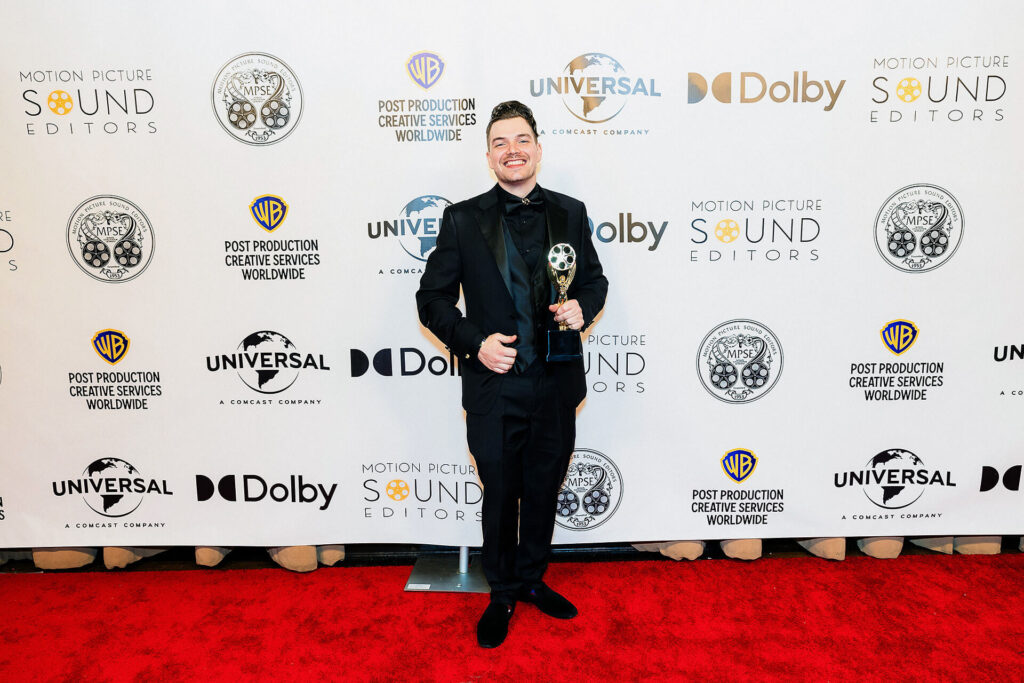
Daniel McNamara is a Los Angeles-based sound designer and effects editor whose credits include Spider-Man: Across the Spider-Verse, The Good Doctor, The Magician’s Elephant and Sausage Party: Foodtopia. Originally from South Jersey, Daniel blends technical precision with playful experimentation, bridging Foley, design and field recording in his work. He is currently based at Sound Crafters in Burbank, California.